Almost a year later, this question continues to be engulfed in debate. Political factions are sharply divided regarding the timing of elections, the essential reforms needed within the system, and even the eligibility of the ousted Awami League to participate. What has surfaced is a stark clash between two political ideologies-one that emphasizes the urgency of elections to restore legitimacy and stability, and another that argues for the necessity of structural reforms and accountability for past injustices before any voting takes place.
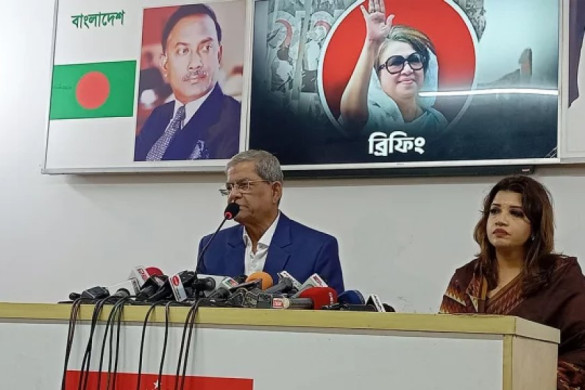
Bangladesh Nationalist Party’s (BNP) acting chairman Tarique Rahman reinforced this message during a youth rally in May 2025, calling out the “deliberate delay” in setting a date and framing December as the deadline for returning to electoral legitimacy. Still recovering from years spent in opposition during Hasina’s administration, the BNP views the current political void as a unique chance to reclaim power. The party has consistently called for parliamentary elections to be conducted by December 2025, framing any postponement as a form of political delay that could exacerbate instability.
This sense of urgency is not an isolated sentiment. Media reports indicate that as many as 52 other parties-from centrist organizations like Nagorik Oikya and the Jatiya Party (JP) to leftist groups such as the Communist Party of Bangladesh-have expressed their support for elections to be held by 2025. Leaders like Nurul Haque Nur of Gono Odhikar Parishad have cautioned that any further delays, particularly into the rainy season of 2026, could pose both practical and political challenges. For these leaders, time is not a luxury; it is a risk.
However, the call for immediate elections is not universally shared. A coalition of Islamist and reformist parties, including Jamaat-e-Islami, Islami Andolan Bangladesh, and the newly established National Citizen’s Party (NCP), has firmly opposed a vote in December 2025. For these groups, the focus is not on speed but on a comprehensive systemic reform.
The NCP, which emerged from the anti-discrimination student movement, has been outspoken in demanding the implementation of the ‘July Charter’ of reforms prior to any elections. Its leaders contend that without constitutional and electoral reforms-such as a proportional representation system-any election would simply replicate existing injustices and sustain elite control. Jamaat-e-Islami and Islami Andolan have reiterated these calls, cautioning that the BNP’s pressure tactics are designed to skew the electoral landscape in its favor.
This reform-first faction unexpectedly found a supporter in Chief Advisor Yunus, who proposed in late 2024 that the election period be extended from December 2025 to June 2026. However, following his June 2025 discussion with Tarique Rahman in London, Yunus pivoted to a February 2026 schedule. This shift sparked outrage from the NCP and Islamist parties, who accused the BNP of wielding excessive influence and commandeering the electoral process. Gazi Ataur Rahman of Islami Andolan even remarked, ‘it appears that BNP is already in power’ after the London meeting.
Their demands are not mere rhetorical gestures. Both Jamaat and NCP have threatened to boycott the election-and even initiate street protests-unless reforms are implemented first. This uncompromising position indicates that the dispute over timing is also a struggle for relevance: without the BNP’s popular support, these smaller parties are attempting to carve out political space by making their participation contingent on structural changes.
Complicating the situation further is the status of the Awami League itself. Once a dominant player in Bangladeshi politics, it is now barred by the Election Commission from engaging in political activities, with its registration suspended. This decision has sparked a debate about whether the exclusion of the Awami League-regardless of its controversial history-would undermine the election’s legitimacy.
It is not surprising that reformist groups like NCP and Jamaat advocate for the party’s exclusion. To them, the Awami League represents years of authoritarianism, corruption, and electoral fraud. NCP convener Nahid Islam has been unequivocal: permitting Hasina’s party to participate would betray the July uprising and disrespect the sacrifices made by protesters. Jamaat Amir Dr. Shafiqur Rahman has taken it a step further, labeling the Awami League’s involvement as ‘unfair’ given its purported history of obstructing free elections.
Interestingly, the BNP has adopted a more inclusive approach, stating that it has no objections to the Awami League participating, as long as the electoral environment is equitable. This stance may indicate a strategic calculation: the BNP is confident in its ability to outvote its opponent but understands that an election that excludes the Awami League could be deemed illegitimate both at home and abroad.
What is driving this polarization? Analysts highlight the uneven distribution of political support. The BNP, bolstered by its extensive grassroots network and renewed energy following Hasina’s departure, is motivated to advocate for an early election. Conversely, parties such as Jamaat and the NCP struggle to gain traction beyond their loyal bases. They fear that without reforms to level the playing field-like proportional representation-they risk being overshadowed by the BNP’s strength. Their push for delays is therefore more about self-preservation than principle.
Meanwhile, the interim government led by Yunus is tasked with the challenging responsibility of reconciling these conflicting demands while upholding its international standing. Global observers, including the European Union and the United States, are closely monitoring the situation. Any election perceived as hurried, exclusive, or manipulated will exacerbate Bangladesh’s legitimacy crisis. However, so too will prolonged delays under the guise of reforms.
As it stands, Bangladesh’s next election is tentatively scheduled for February 2026. Yet, this timeline is far from certain. The reformist coalition insists it will not engage without significant changes, while the BNP and its allies caution that further delays will only incite disorder. The issue of the Awami League’s involvement remains unresolved, and the interim government has yet to prove its ability to enforce regulations impartially or to prevent violence.
Bangladesh is currently confronted with a critical dilemma. Moving forward with elections without necessary reforms could perpetuate the ongoing cycle of disputed elections that has historically troubled the nation. Conversely, an indefinite delay could lead to a state of paralysis, leaving governance in the hands of an unelected caretaker with minimal authority.
The forthcoming parliamentary election transcends a mere power struggle; it serves as a litmus test for Bangladesh’s ability to restore democratic legitimacy following a significant upheaval. Two opposing narratives dominate the political landscape: the BNP and its allies advocate for an immediate election to bring back stability, while the NCP and Islamist factions insist on reforms prior to any voting. Beneath these discussions lie profound concerns regarding the inclusivity of the political framework and the legitimacy of exclusionary practices directed at the Awami League.
Bangladesh finds itself at a pivotal juncture. Should the political elite fail to balance the urgency of the situation with the need for reform, the country risks falling into yet another cycle of disputed elections, boycotts, and civil unrest. The decision is clear: either take this opportunity to forge a credible and inclusive route back to democracy, or waste it in the familiar quagmire of partisan stalemate.
The international community is observing closely, but more crucially, the citizens of Bangladesh-exhausted by instability and longing for genuine representation-deserve far more than another decade of lost opportunities.
Author: Suraiya Shuvra