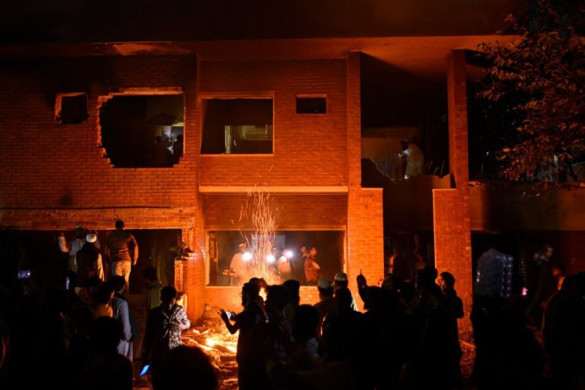
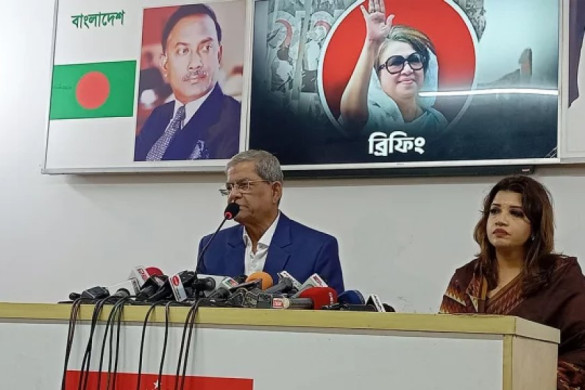
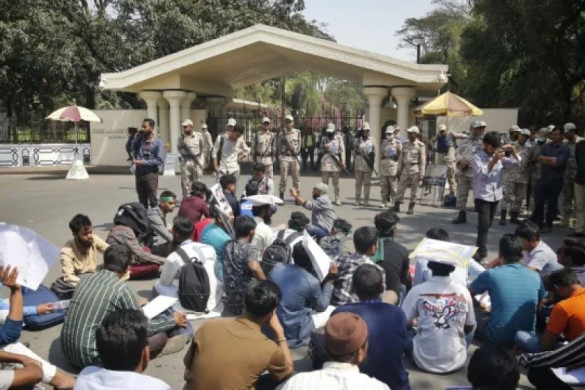
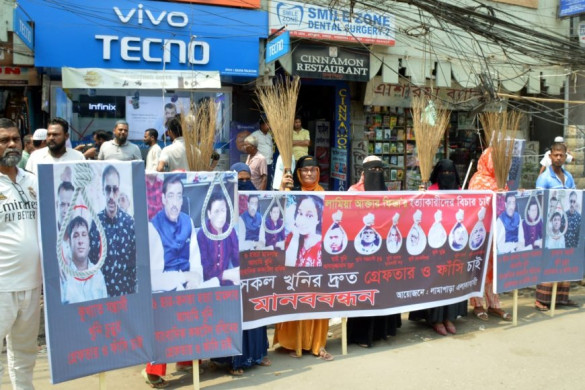
The museum will chronicle various chapters of Sheikh Hasina’s 16-year tenure, including the Pilkhana massacre, enforced disappearances, Ayna-ghor incidents, the Shapla Square killings, and a series of rigged elections, all preserved as historical records in the July Memorial Museum.
On Saturday (20 September) at a meeting held at the State Guest House in Jamuna, museum authorities briefed Chief Advisor Professor Muhammad Yunus about the project. Culture Advisor Mostafa Sarwar Faruqi mentioned that construction is expected to be completed by 31 October, with the museum’s inauguration planned for the first week of November.
Faruqi said, “We are curating images of Hasina’s misrule so that the public can clearly understand the 16-year history of fascism. All atrocities and acts of violence carried out from Ganabhaban will be documented here.”
Chief Advisor Professor Muhammad Yunus thanked everyone involved in the construction, adding that the museum will instill a sense of resistance against misrule. “Visitors will be able to experience the flood of people at Ganabhaban on 5 August,” he added.
Museum Chief Curator Tanzim Wahab noted that this will be a unique museum presenting a continuous account of 16 years of events. Visitors will be able to see how Sheikh Hasina governed the country.
Faruqi further stated that several audio recordings with instructions for enforced disappearances and killings have already been collected and will be preserved in the museum. It will also show how Sheikh Hasina allegedly offered false consolation to the families of victims.
Additionally, the museum will feature a screening center where documentaries on July and Sheikh Hasina’s 16-year tenure will be shown.