On Monday (17 November), a three-member bench led by Justice Golam Murtuza Mojumdar delivered the verdict. The 453-page judgment is divided into six sections, detailing the charges brought against the three accused.
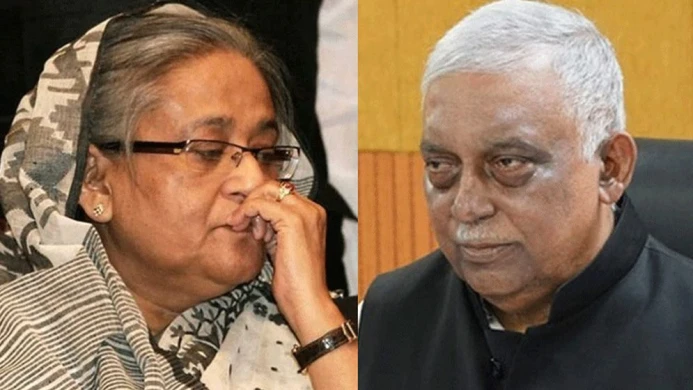
The tribunal stated that evidence of crimes against humanity was found against all three. The verdict noted that although Mamun’s crimes were deserving of the maximum punishment, his sentence was reduced because he served as a state witness. On the other hand, the court cited the fugitive status of Sheikh Hasina and Kamal as an indicator of their consciousness of guilt. The verdict further ordered that the properties of the former prime minister and former home minister be seized and used in the name of the July martyrs.
Because they are fugitives, Sheikh Hasina and Asaduzzaman Khan Kamal will not be eligible to appeal. Prosecutor Gazi Monowar explained that the tribunal law clearly states that an accused must either surrender or be arrested within 30 days of the verdict in order to file an appeal. No fugitive accused can avail themselves of the right to appeal—therefore, the path to appeal is closed for the two.
On June 1, the prosecution formally submitted charges against the three accused. They faced five allegations: delivering an inciting speech at the July 14 press conference at Ganabhaban, ordering the suppression of protests using helicopters and lethal weapons, the shooting and killing of Abu Sayeed in Rangpur, the fatal shooting of six protesters in Dhaka’s Chankharpul, and the burning of six people to death in Ashulia. The tribunal officially framed these charges on July 10. On that day, the only arrested accused, Mamun, confessed in court to involvement in crimes against humanity and applied to become a state witness, which was later approved.
Currently, Sheikh Hasina and Asaduzzaman Kamal remain fugitives, while Chowdhury Abdullah Al-Mamun is in custody.